Page 1 of 1
How to lock crankshaft for leakdown test
Posted: Mon Feb 16, 2026 4:31 pm
by dbuelke
In addition trying to find the exact TDC, I have a problem with the engine turning over when pressure is applied. I’ve tried leaving it in gear, but there is still enough play to cause a loss of the TDC point. Trying to block the crank at just the right position to hold TDC, to where pressure rotates back into the crank locks, has met with limited success. I think the engine has a serious leak problem because my initial tests showed leakdown in the one to seven second range! Any further suggestions to keep the engine from rotating are appreciated. BTW, this is a ‘26 with the spring loaded crank that doesn’t lend itself to clamping the crankshaft itself.
Re: How to lock crankshaft for leakdown test
Posted: Mon Feb 16, 2026 4:53 pm
by Jerry VanOoteghem
Why can''t you check it at BDC?
Re: How to lock crankshaft for leakdown test
Posted: Mon Feb 16, 2026 6:04 pm
by TXGOAT2
First of all, how does the engine run? ........ With the piston at TDC, you will have very little volume under pressure, and I'd expect leakdown to be very rapid. Is there a spec for pressure and leakdown time? I'd think the engine would need to have been run just before the test to have a normal amount of oil on the pistons and rings and the pistons expanded to their normal running fit. With the piston at BDC, you'd have a lot more volume under pressure, and the rings and piston would be in the least worn part of the bore, which might give a better indication of how air tight they'd be under normal operation. As far as I know, all engines have some leakage past the pistons and rings. With a Model T, manually cranking a warmed up engine with the key off and the throttle wide open will give you a fair idea of compression efficiency and balance. To test valve seating using compressed air, having the piston near TDC on the compression stroke or the power stroke should assure that both valves are closed in that particular cylinder Putting the hand lever in high to set the brakes ought to be sufficient to keep the engine from moving too far off TDC to do a compressed air test.
Re: How to lock crankshaft for leakdown test
Posted: Mon Feb 16, 2026 6:25 pm
by Mike Silbert
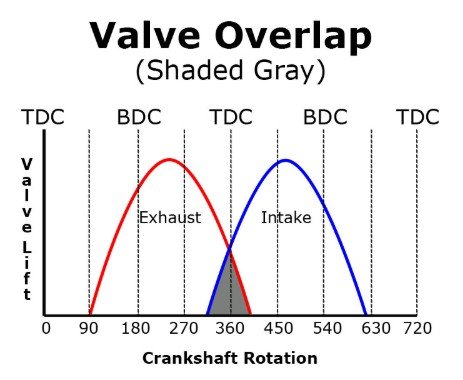
While BDC is much easier to prevent the engine from moving it has several flaws in the process.
1) The wear is minimal at the bottom and it is not the most important part of the cycle.
2) At least one valve is open at BDC making testing the valve seal quite hard.
Mike
- Screenshot 2026-02-16 181316.jpg (30.38 KiB) Viewed 261 times
Re: How to lock crankshaft for leakdown test
Posted: Mon Feb 16, 2026 10:47 pm
by PorkChops
Would having a second person clamping low and reverse together still have too much backlash?